
Strategic Cost Management for Hardware: Navigating the 0-to-1 Journey with Advanced Cost Modeling
By Vicky Lee, Senior Procurement Manager
4/18/2026
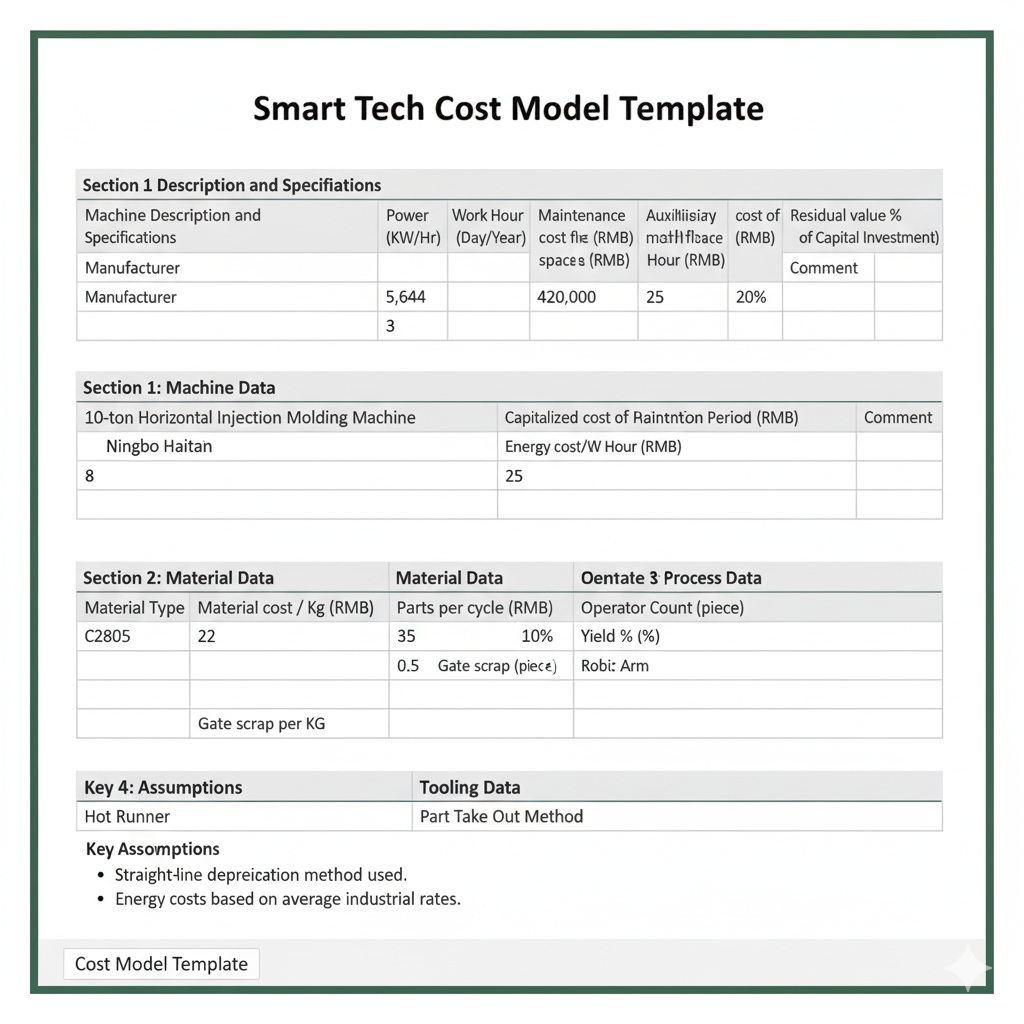
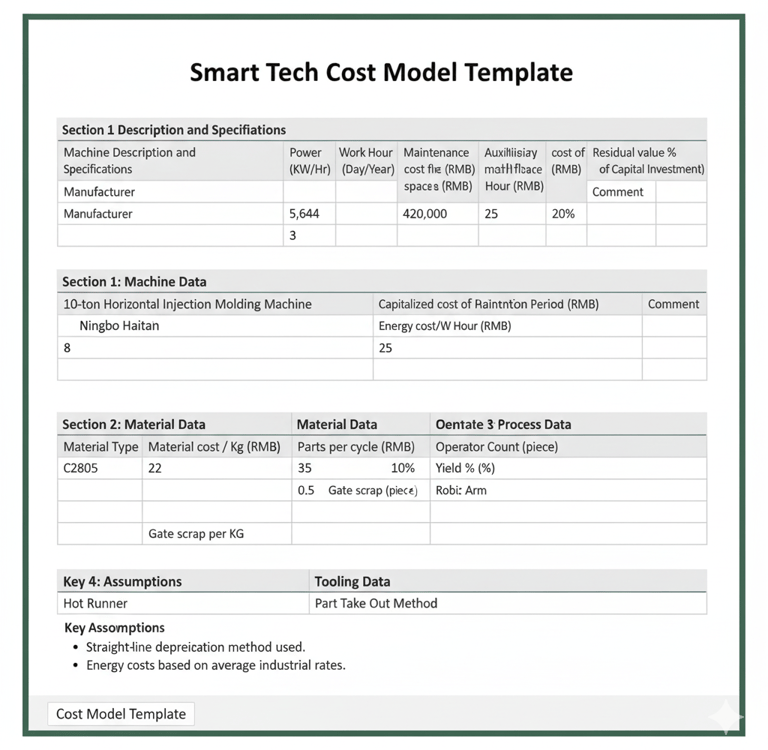
In the fiercely competitive landscape of smart technology, taking a hardware product from concept to mass production - the arduous "0 to 1" journey - is fraught with financial peril. While innovation and speed-to-market capture headlines, it is rigorous cost management that ensures survival and fuels growth. Based on extensive industry practice and data-driven analysis, I advocate for the implementation of an advanced, dynamic Cost Model not merely as an accounting exercise, but as a core strategic asset.
Here is why a sophisticated cost model is indispensable, and how we can leverage it to maximize profitability.
1. The Asymmetric Power of Cost Reduction
To understand the necessity of cost modeling, we must first recognize the sheer leverage of cost reduction. Many organizations focus primarily on revenue growth, overlooking the dramatic impact that incremental cost savings.
Consider a standard smart hardware product scenario: If a company has a sales volume of 10 million, with costs consuming a significant percentage of revenue. As illustrated in standard financial modeling, a mere 1% reduction in procurement costs does not equal a 1% increase in profit - it is a multiplier. Depending on the existing cost structure (e.g., whether costs are 60% or 80% of revenue) and the current profit margin (e.g., 10% vs. 4%), that 1% drop in procurement costs can drive a 6% to 20% direct increase in total profit.
Every dollar saved in the supply chain drops straight to the bottom line. A robust cost model is the flashlight we use to find those dollars.
2. Deconstructing the Product Cost Structure
You cannot optimize what you do not understand. A mature cost model requires a granular breakdown of the product cost structure, moving far beyond a simple Bill of Materials (BOM).
The architecture of our cost model must follow this progression:
Material Cost (The Foundation): This includes direct material costs, inbound freight, planned scrap/yield loss, and auxiliary materials.
Manufacturing Cost (COGS): We take the Material Cost and add direct labor, direct equipment costs (depreciation, energy), and indirect overheads (indirect labor, facilities rent, maintenance).
Total Product Cost (Ex-Factory): To reach the final factory gate price, we must allocate R&D amortization, SG&A (Selling, General, and Administrative expenses), and the target factory profit.
Crucially, the model must distinguish between variable costs (materials, direct labor) which scale with volume, and fixed costs (equipment depreciation, rent) which require economies of scale to dilute.
3. Visualizing the Value Chain: The Overall Cost Curve
Hardware costs do not stop at the factory gate. To truly manage costs, we must visualize the entire lifecycle cost curve across the value chain.
Supply Chain & Manufacturing (COGS): From raw materials entering the production floor to the finished good leaving the factory.
Logistics & Market (The "Financial Black Hole"): As the product moves through transportation, warehousing, and into the hands of the marketing team, costs escalate rapidly. Selling expenses, channel marketing, and outbound logistics often represent a significant "black hole" where margins vanish if not strictly modeled and controlled.
Distribution to Retail: The compounding effects of wholesale margins, retail markups, and value-added taxes (VAT) dictate the final shelf price.
After-Sales (Total Cost of Ownership - TCO): The curve concludes with the user. Quality issues result in warranty claims, service costs, and disposal costs. A cheap component that fails in the field costs exponentially more than a reliable, slightly pricier alternative.
Our cost model must account for the TCO, not just the BOM.
4. Directions for Optimizing the Cost Model
To transition from a static spreadsheet to an advanced "Should Cost" model, we must implement several key optimizations:
Micro-Driver Analytics: We must break costs down to their absolute root drivers. For example, material cost is not just a line item; it is driven by raw material unit price × (net product weight + scrap/runner loss).
Algorithmic Equipment Costing: Machine costs must be calculated scientifically based on cycle times, power consumption (KW/Hr), floor space utilization, and specific depreciation methodologies (e.g., straight-line vs. declining balance).
Live Database Integration: A static model is a dead model. The tool must be linked to dynamic databases updating commodity indices, regional labor rates, and standard machine operating costs.
Empowering Cost Engineers: The model relies on cost engineers who possess deep manufacturing process knowledge - professionals who dare to question supplier quotes and understand the physical realities of the shop floor.
By building this transparent, algorithm-driven framework, we establish a credible "Should Cost" reference for every component.
5. Cross-Functional Application of the Cost Model
A sophisticated cost model is a unified language for the entire business, driving "the right things, done right."
For Procurement (Negotiation & Benchmarking): It shifts vendor negotiations from emotional haggling to fact-based discussions. Buyers can evaluate supplier quotes against the "Should Cost," identifying specific areas (e.g., excessive cycle times or inflated material markups) to jointly develop cost-reduction plans.
For R&D and Marketing (Design to Cost): Eighty percent of a product's cost is locked in during the design phase. The model allows engineers to simulate the financial impact of different design architectures or material choices before tooling begins. It also enables reverse-engineering and cost-teardowns of competitor products.
For Manufacturing (Lean Operations): The model provides a clear lens to identify manufacturing waste. If the model says a process should take 30 seconds and cost $0.50, but actuals are 45 seconds and $0.80, production management knows exactly where to apply lean principles.
For Quality Assurance: It visualizes the hidden costs of poor quality, justifying investments in better tooling or testing by proving that preventing a defect is cheaper than servicing it in the field.
In the 0-to-1 lifecycle of smart hardware, intuition is not a strategy.
An advanced, data-driven cost model is the central nervous system of our profitability. By implementing a rigorous "Should Cost" framework, we empower procurement, guide R&D, streamline manufacturing, and ultimately ensure that our technological innovations translate into sustainable commercial success.
Email Us
Flat 2401, Industrial Building, San Po Kong, Hong Kong 999077